

The Man who Went to Mars
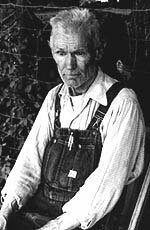 The first thing you noticed about Buck Nelson was his eyes; slightly crossed, they seemed to stare right through you without seeing.? Dressed in faded overalls and work shirt, he sat on a tattered cane-bottom chair under a shade tree near his well-weathered house.
Nelson sat, relaxed, like a king on his throne. It is 1965? and he is presiding over his Tenth annual Spacecraft Convention; a strange gathering that, for more than a decade, brought together people from throughout the country who claimed contact with visitors from outer space.
Nearby carnival rides and games of chance ringed the pasture near Mountain View, Missouri.? Benches of weathered boards nailed to stumps ringed a rickety stage where a plump woman was droning on about her experiences with space visitors.
It was during the height of the "flying saucer" period in the late 1950's and early 1060's that the grizzly old man, transplanted to Howell County from working cattle out west, had the most success with his Spacecraft Convention. (Flyer for the convention.) (PDF)
Buck's climb to fame came in 1956 when he 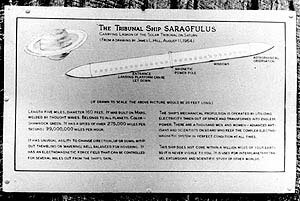 published "My Trip to Mars, the Moon and Venus." It told of the day in July, 1954 when he first met visitors from another planet.
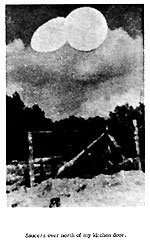
"It was a fairly good day," he told me, "And I was able to get out. I saw these things over my house. I called them things at the time; I didn't know what they were. But they looked just like we called them...flying saucers."
Nelson said when he shined a flash light at them, a ray came out of one of the crafts and struck him. "It was much brighter and hotter than the sun," Buck wrote. After the ray struck him, he claimed a long-term back problem was gone and his failing vision improved.
He did not see his benefactors at that time: "It was the second or third time before they came out." The date he gives in his book is March 5, 1955.
?
 There followed, according to his account, trips throughout the galaxy: to Mars, where they had horses and cattle; the Moon where he talked to the ruler; and Venus where they had cars without wheels or fenders.
What did the "space brothers", as he called them, look like? "They look like any of us; any of us here on the grounds," Nelson said, making a sweeping motion with his hand.
Why did the visitors come here? "Their purpose is to show us how to live better. They have no hospitals and look at the money we spend on drugs."
Nelson said the saucers came to Howell County because the magnetic currents there were just right. They visited him, he said, because they knew that he would not shoot them down.
While the government, and his neighbors, didn't accept Nelson's story, other people apparently did. Nelson claimed he had as many as 5,000 people at some of his Spacecraft Conventions. This particular day there was plenty of room on the stump benches. (Report on the 1958 convention.) (PDF)
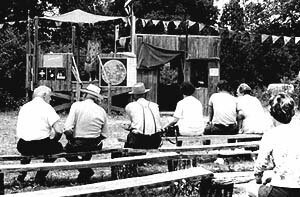 Speakers from around the country stood on the flimsy wooden platform, protected from the sun by a tarpaulin, and told, in monotonous tones, about their contacts with space people. (An unusual fellowship.) (PDF)
The overall theme was friendliness. "It's important the visitors know they are welcome," Buck said. "If they know we are friendly, they will land more often, they will come in and help us."
Nelson's contact with space craft soon stopped but he said they had visited since. He knew because a magnet suspended from the ceiling of his house would move when a craft was near.
Buck Nelson's exposure decreased with the flying saucer mass hysteria in the late 1960's.? As the decade changed, Nelson moved to California. Word? of his death filtered back to the Ozarks several years later.
With Buck's passing, there ended an unusual chapter in the always interesting history of the Missouri Ozarks, that chapter in which it was the "spacecraft capitol" of the country.
Maintained by - Updated January 20, 2005
